
Cocoa CRA Tax Increment Financing: What Investors Need to Know for FY2026

Updated: Aug 25
The City of Cocoa Community Redevelopment Agency confirmed at its May 12, 2026 meeting that the agency operates on tax increment financing revenues generated within the defined special district. The CRA fiscal year runs October 1 through September 30, per the Cocoa CRA agenda materials. This matters for anyone buying, selling, or developing commercial property within the redevelopment boundaries.
Tax increment financing is one of the most misunderstood tools in municipal economic development. Here's the short version: when property values increase within a CRA district, the additional tax revenue above the frozen base year goes directly to the CRA, not the general fund. That money gets reinvested in the district through infrastructure, facade grants, land assembly, and incentive programs designed to attract private investment.
How Cocoa CRA Tax Increment Financing Works
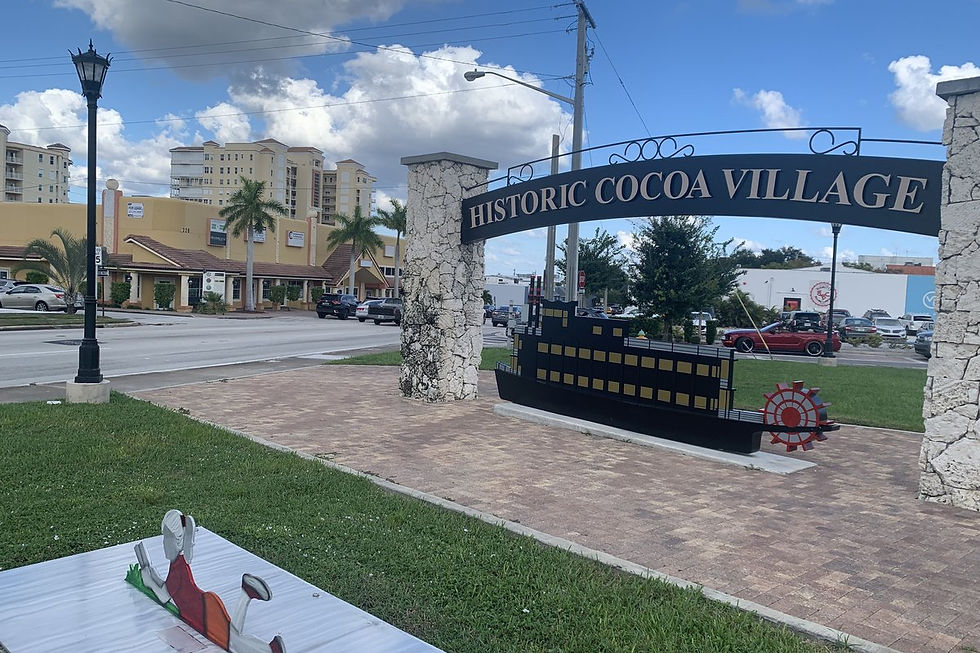
The Cocoa CRA boundaries include portions of downtown Cocoa, the Cocoa Village historic district, and adjacent commercial corridors. According to the City of Cocoa CRA website, these defined special districts capture incremental property tax growth to fund redevelopment activities. The more property values rise within the district, the more TIF revenue the agency generates. It creates a self-reinforcing cycle when it works correctly.
For commercial real estate investors, this means two things. First, improvements you make to a property within the CRA boundaries may qualify for matching grants, facade improvement programs, or other direct subsidies. Second, the CRA's infrastructure investments in streetscaping, parking, utilities, and public amenities benefit your property without you paying for them directly. That's value creation funded by the district itself.
The October to September fiscal year is worth noting if you're timing a project. Grant applications, budget allocations, and new program rollouts typically align with the budget cycle. If you're looking at a Cocoa CRA property and want to maximize available incentives, understanding when new fiscal year dollars become available gives you leverage in negotiations.
Why It Matters for Brevard CRE
Cocoa has been the overlooked cousin in Brevard County commercial real estate for years. Melbourne and Palm Bay grabbed headlines with aerospace expansion. Titusville rode the SpaceX wave. Cocoa stayed quiet. But TIF-funded redevelopment districts have a way of changing trajectories. We've seen it play out in other Florida markets where CRA investment catalyzed private capital inflows that transformed entire corridors.
The Cocoa Village historic district already draws foot traffic with its antique shops, restaurants, and waterfront access. What it lacks is the kind of Class A commercial product that commands premium rents. CRA infrastructure dollars can bridge that gap. Streetscape improvements, parking solutions, and facade grants reduce the out-of-pocket cost for developers willing to take on adaptive reuse projects or ground-up construction within the district.
Retail investors should pay attention. The combination of TIF subsidies and relatively lower acquisition costs compared to Melbourne or Viera creates an arbitrage opportunity. You're buying at Cocoa prices today while the CRA invests public dollars to push values toward what comparable properties fetch in more established submarkets.
RCRE Take
I'll be direct: most investors overlook CRA districts because they don't understand TIF mechanics. That's a mistake. Tax increment financing is essentially a municipality co-investing in your property's success. When the CRA spends money on streetlights, sidewalks, and drainage, your asset benefits. When they offer facade grants, your renovation budget stretches further. When they assemble parcels and clear title issues, your deal timeline shortens.
Cocoa's position on the Indian River gives it waterfront exposure that's hard to replicate elsewhere in Brevard at these price points. The downtown core has walkability, historic character, and existing retail infrastructure. What it needs is capital willing to bet on the district's upside. The CRA's continued TIF funding signals that the city is committed to that bet with public dollars.
The FY2026 budget cycle running through September means we're roughly four months into the current funding year. If you're evaluating a Cocoa CRA acquisition, now is the time to understand what programs have remaining capacity and what's planned for the October 2026 budget. That information shapes your underwriting assumptions and your negotiating position with sellers who may not realize what incentives apply to their property.
Submarket Context
Cocoa's commercial inventory includes a mix of historic storefronts, strip retail, and underutilized parcels ripe for redevelopment. The CRA boundaries encompass some of the most developable land in the submarket. For comparison, investors looking at similar municipal planning activity in West Melbourne should note that Cocoa's TIF structure offers a different incentive stack. West Melbourne's growth is market-driven. Cocoa's growth has a public capital partner.
Current commercial investment listings in Brevard County include properties that may fall within CRA boundaries or adjacent areas poised to benefit from spillover effects. Understanding where the district lines fall is essential due diligence for any acquisition in the Cocoa submarket.
What This Means for Your Next Move
If you're buying commercial property in Cocoa, you need to know whether it falls within the CRA district. If you're selling, that designation is a marketing asset that justifies premium pricing. If you're a tenant considering a lease in the area, CRA improvements to the surrounding streetscape and parking directly affect your foot traffic and customer experience.
Tax increment financing districts don't last forever. Florida law caps their lifespan. Properties that appreciate while the TIF mechanism is active benefit from public investment they won't see once the district sunsets. That's a window, not a permanent condition.
If you are buying, selling, or leasing commercial property in Cocoa or anywhere in Brevard County, call before you sign anything. Reach RCRE at 321-300-4773 or contact us directly. We know which districts have active programs, which incentives apply to your property type, and how to structure deals that maximize available benefits.
Sources
City of Cocoa Community Redevelopment Agencies: Official CRA information page confirming TIF funding structure and fiscal year calendar
RCRE Commercial Investment Listings: Current Brevard County commercial properties available through Reach Commercial Real Estate
RCRE Services: Brokerage services including buyer representation, seller representation, and market analysis for Brevard County commercial real estate


Comments