
DSCR Requirements Shape Value-Add Financing on Brevard County Commercial Deals
- Cassandra Hartford
- Jul 14
- 5 min read

Buyers chasing value-add commercial deals in Brevard County keep running into the same wall. Conventional lenders require a minimum 1.25x debt service coverage ratio based on in-place income. Not pro forma. Not stabilized projections. Today's rent roll, today's NOI, today's ability to cover debt payments with a 25% cushion.
This math kills deals before they start. An investor finds a tired retail strip along US-1 in Melbourne with below-market rents. The upside is obvious. The repositioning plan is sound. But when the current NOI cannot support the loan at 1.25x coverage, the deal either dies or requires a different capital structure entirely.
How DSCR Math Works on Brevard County Deals
Debt service coverage ratio is straightforward: net operating income divided by annual debt service. A 1.25x DSCR means the property's NOI must be 125% of the annual mortgage payments. If annual debt service is $100,000, the property needs to generate $125,000 in NOI to qualify.
The trap for value-add buyers is that lenders calculate this using current rent roll, not projected rents after you've executed your business plan. A strip center leased at $12 per square foot when market is $18 per square foot? The lender underwrites at $12. Your renovation budget and lease-up timeline are irrelevant to their calculation.
In deals I have worked in Brevard, this creates a gap that kills 60% to 70% of value-add opportunities at the conventional financing stage. The economics might pencil beautifully at stabilization. But the buyer cannot get conventional debt to close the deal because today's income does not clear the 1.25x hurdle.
Why This Hits US-1 and Melbourne Retail Hardest
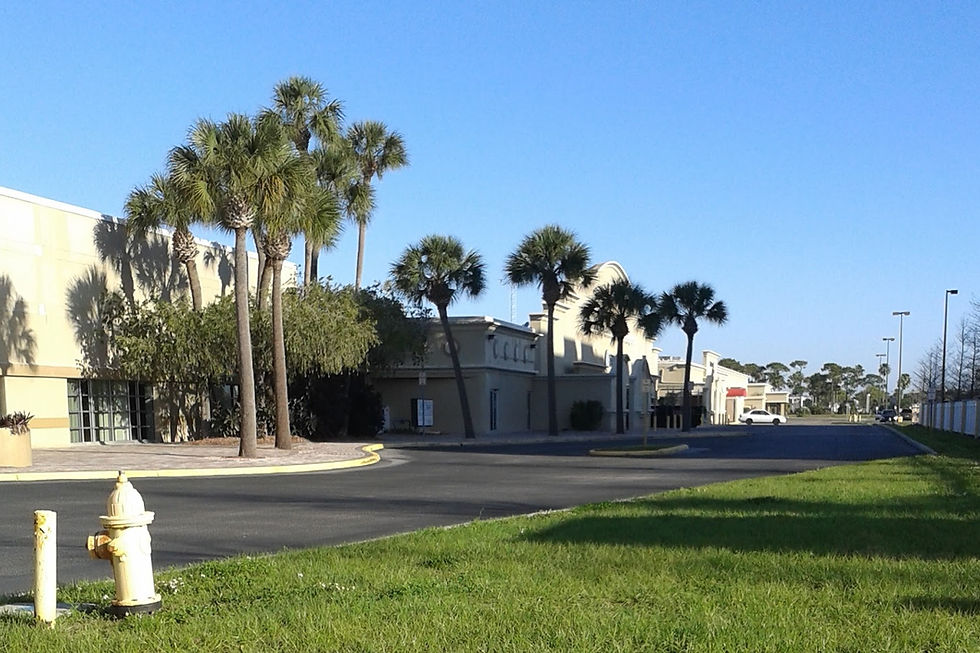
The US-1 corridor through Melbourne and the older retail strips west of downtown have significant pockets of below-market leases. Multi-tenant properties where long-term tenants signed renewals at rates that no longer reflect current demand. Landlords who prioritized occupancy over rent growth during softer years.
These are exactly the properties that attract value-add investors. The repositioning thesis is sound: buy at a discount to replacement cost, renovate common areas, roll leases to market rates, refinance or sell at a compressed cap rate. We have seen this play out in Melbourne and Palm Bay repeatedly over the past five years.
But the financing structure has to match the business plan. Conventional debt priced for stabilized assets does not work for transitional properties. The 1.25x DSCR requirement is not negotiable with most banks and credit unions. It is baked into their underwriting guidelines.
RCRE Take
Here is the reality: if you are pursuing value-add commercial real estate in Brevard County, you need to underwrite the capital stack before you underwrite the deal. The equity requirement on transitional properties is higher than most buyers expect. Bridge debt, private capital, or seller financing often fills the gap, but all of those options come with higher costs than conventional loans.
The buyers who execute successfully on these deals understand that the financing premium is part of the acquisition cost. A bridge loan at 150 to 200 basis points above conventional rates for 18 to 24 months is the price of admission. The math still works if you buy right and execute the business plan. It just requires more equity and a clear exit to permanent financing.
What I tell investors eyeing the US-1 corridor: know your DSCR number before you write the LOI. Run the debt service calculation at realistic interest rates. If the current rent roll does not clear 1.25x with a 20% to 25% buffer for rate movement, you are in bridge territory. Price accordingly. As I wrote about in a previous post on building CRE deal flow in Brevard County, pipeline management includes knowing which deals fit your capital structure and which do not.
Submarket Context
Melbourne's retail inventory along US-1 and Babcock Street includes numerous multi-tenant properties with repositioning potential. Vacancy rates in older strip centers have compressed over the past two years as tenants priced out of newer construction seek secondary locations. For investors who can structure the capital stack correctly, this submarket offers yield-on-cost spreads that do not exist in Class A product. Browse current commercial investments on the Space Coast to see what is trading now.
The gap between in-place rents and market rates is widest in centers built before 2000 with deferred maintenance and long-term tenants. This is exactly where the opportunity sits, but only if you bring the right capital structure to close.
If you are buying value-add retail or office in Brevard County, call before you sign anything. 321-514-0876. Or reach out through our contact page and let's talk capital structure before you find out the hard way.
Frequently Asked Questions
What is DSCR in commercial real estate?
Debt service coverage ratio measures a property's net operating income divided by its annual debt payments. Conventional lenders require a minimum 1.25x DSCR, meaning the property must generate 25% more income than the mortgage payments require.
Why do lenders use in-place income instead of projected rents?
Lenders underwrite based on current rent roll because projected rents are speculative. Until leases are signed at higher rates, the income does not exist. This protects the lender if the borrower's business plan fails to execute.
What financing options exist for value-add deals that do not meet 1.25x DSCR?
Bridge loans, private capital, and seller financing are the primary alternatives. Bridge loans typically run 150 to 200 basis points above conventional rates with 18 to 24 month terms. The exit strategy is usually refinancing into permanent debt once the property stabilizes.
How do I calculate if a Brevard County property meets DSCR requirements?
Divide the property's current annual NOI by the proposed annual debt service. If the result is 1.25 or higher, the property qualifies. Example: $125,000 NOI divided by $100,000 annual debt service equals 1.25x DSCR, which meets the minimum threshold.
What cap rates are typical for value-add retail in Melbourne?
Value-add retail along US-1 and secondary corridors in Melbourne typically trades between 7% and 9% cap rates based on in-place income. Stabilized values after repositioning compress to 6% to 7% cap rates depending on tenant quality and lease terms.
Sources
RCRE Market Intelligence: Brevard County commercial real estate market analysis and underwriting resources
Frequently Asked Questions
**What is DSCR in commercial real estate?** Debt service coverage ratio measures a property's net operating income divided by its annual debt payments. Conventional lenders require a minimum 1.25x DSCR, meaning the property must generate 25% more income than the mortgage payments require.
**Why do lenders use in-place income instead of projected rents?** Lenders underwrite based on current rent roll because projected rents are speculative. Until leases are signed at higher rates, the income does not exist. This protects the lender if the borrower's business plan fails to execute.
**What financing options exist for value-add deals that do not meet 1.25x DSCR?** Bridge loans, private capital, and seller financing are the primary alternatives. Bridge loans typically run 150 to 200 basis points above conventional rates with 18 to 24 month terms. The exit strategy is usually refinancing into permanent debt once the property stabilizes.
**How do I calculate if a Brevard County property meets DSCR requirements?** Divide the property's current annual NOI by the proposed annual debt service. If the result is 1.25 or higher, the property qualifies. Example: $125,000 NOI divided by $100,000 annual debt service equals 1.25x DSCR, which meets the minimum threshold.
**What cap rates are typical for value-add retail in Melbourne?** Value-add retail along US-1 and secondary corridors in Melbourne typically trades between 7% and 9% cap rates based on in-place income. Stabilized values after repositioning compress to 6% to 7% cap rates depending on tenant quality and lease terms.


Comments